
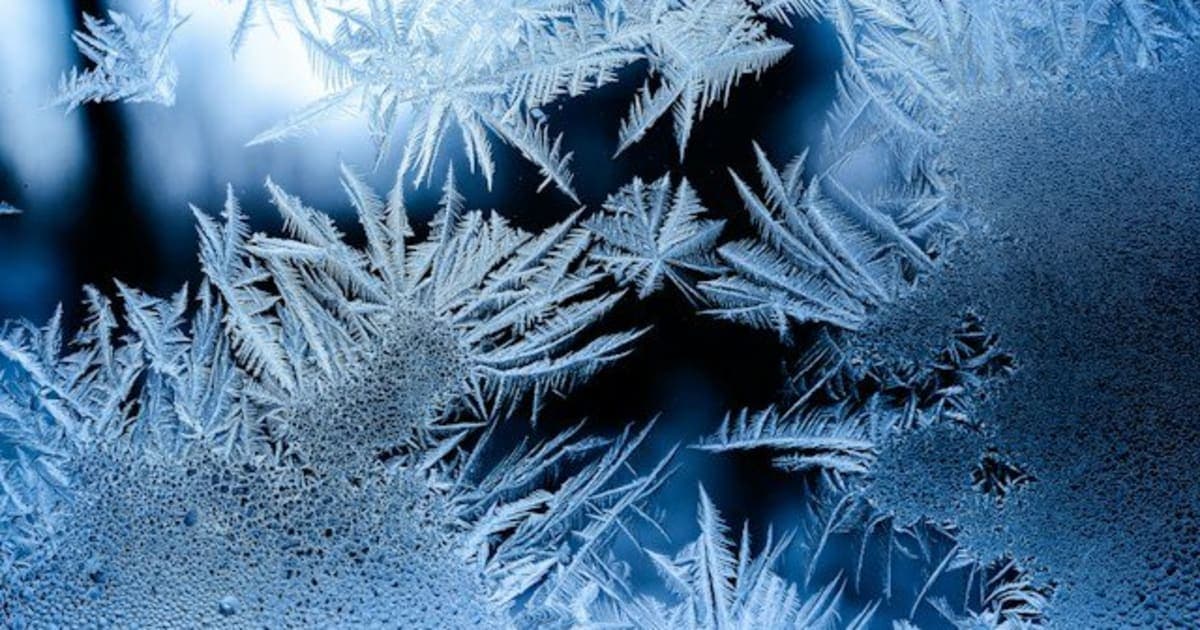
The 50-Micrometer Line: How Ice Crystal Size Decides Whether a Frozen Dessert Feels Silky or Coarse
The 50-Micrometer Line: How Ice Crystal Size Decides Whether a Frozen Dessert Feels Silky or Coarse
Pull a pint from the freezer after two weeks and drag a spoon through it. If the texture has shifted from smooth to coarse, from yielding to resistant, from silky to something that registers as faintly icy on the tongue, you have experienced the most consequential physical change a frozen dessert can undergo. The cause is not a change in flavor, not a failure of the fat, and not a problem with the original recipe. It is a change in the size of the ice crystals inside, and the difference between a scoop that feels luxurious and one that feels grainy is, in most cases, a matter of a few dozen micrometers.
That number has a name in food science. It is the 50-micrometer threshold, and it is the single most useful piece of structural knowledge anyone making or evaluating frozen dessert can carry.
What an Ice Crystal Actually Is Inside a Frozen Dessert
Ice cream is not a solid. It is a foam, a gel, a fat emulsion and a partially frozen solution all at once. When a mix goes into the freezer, only a portion of the water in it actually freezes, typically somewhere between 70 and 80 percent at serving temperature, depending on the sugar concentration, the fat content and the base ingredients. The rest remains as an unfrozen aqueous phase surrounding everything else: air bubbles, fat globules, proteins, sugars and the stabilizer network.
The water that does freeze forms discrete ice crystals, each one a lattice of water molecules that has excluded everything else, sugar, protein, minerals, from its structure during formation. Those crystals are not uniformly sized, nor are they static after they form. They exist in a dynamic, competitive microenvironment where smaller crystals are thermodynamically unstable relative to larger ones, and where any energy input (including a small rise in temperature) provides the conditions for larger crystals to grow at the expense of smaller ones.
At the moment a well-made frozen dessert comes out of an industrial or batch freezer, most of those crystals are small, often in the range of 20 to 40 micrometers in diameter, roughly the width of a human hair halved. That is the size at which the human tongue cannot detect them as individual particles. The product feels smooth because, structurally, it is smooth. The crystals are below the perception threshold.
The 50-Micrometer Line: Why Your Tongue Has a Detection Limit
Human oral tactile sensitivity is not infinitely fine. The tongue and palate can detect particle size differences in food, but only above a certain scale. For ice crystals in frozen desserts, that detection threshold sits at approximately 50 micrometers. Crystals below that size are perceived collectively as a smooth, continuous cold mass. Crystals above it begin to register as discrete particles, first as a faint graininess, then as a clearly icy, coarse texture as the mean crystal size climbs further toward 100 micrometers and beyond.
This threshold is not a rough estimate. It is drawn from sensory and structural studies in ice cream science and is consistently referenced in food science literature on frozen dessert formulation. The implication is precise: the difference between a scoop that feels luxurious and one that feels like it has been through a cycle of partial thawing is not a matter of dramatic structural failure. It is a matter of crystal size crossing a line that the human palate is specifically sensitive to detecting.
What makes this number so important is that it transforms the abstract instruction "keep ice crystals small" into something actionable and measurable. Every formulation decision, the type of sugar, the fat composition, the stabilizer choice, the rate of freezing, is ultimately an attempt to keep mean crystal size below 50 micrometers, or to slow the rate at which crystals grow past it after the product leaves the production environment.
Nucleation and Growth: Two Separate Events That Both Determine Texture
Most discussions of ice crystal size collapse two distinct physical events into one, which obscures where problems actually originate. Nucleation and crystal growth are not the same thing, and they are not controlled by the same variables.
Nucleation is the process by which ice crystals first form. It happens during the initial freezing stage, when the mix is supercooled, brought below its freezing point, and water molecules begin organizing into the lattice structure of ice. The rate of nucleation determines how many crystals form. Fast cooling produces rapid nucleation: many crystals form almost simultaneously, and because the available water is divided among a large number of nucleation sites, each individual crystal ends up small. Slow cooling produces fewer nucleation sites, which means less competition for available water and, consequently, larger initial crystals.
This is why continuous freezers in industrial production, which freeze mix rapidly with intensive mechanical scraping and aeration, produce a finer initial crystal distribution than a still-freezing method. The physics is straightforward: more crystals competing for the same water means smaller crystals.
Crystal growth begins immediately after nucleation and never entirely stops. Even at stable freezer temperatures, crystals are in a state of slow competition. The mechanism responsible for most texture degradation in stored frozen desserts is called Ostwald ripening: a thermodynamic process in which smaller crystals dissolve back into the unfrozen aqueous phase and redeposit onto larger crystals, because the surface energy of small crystals makes them less stable than larger ones. Over time, the mean crystal size in a product increases even under constant, cold conditions, and it accelerates sharply when temperature is not constant.
Understanding that nucleation and growth are separate events explains something that often confuses consumers and even some operators: a product can have excellent initial texture, fine crystals, smooth mouthfeel, and develop poor texture over time without any visible defect in the original production. The initial quality was real. The degradation is a storage and cold-chain problem, not a formulation failure at the source.
Why Ice Cream Goes Icy After You Buy It: The Recrystallization Mechanism
Recrystallization is the umbrella term for the set of processes by which ice crystals in a frozen dessert grow larger after the initial freezing stage. Ostwald ripening is one mechanism. Accretion, the direct aggregation of crystals that contact each other, is another. But the mechanism that causes the most rapid and noticeable texture degradation in real-world storage is melt-refreeze cycling driven by temperature fluctuation.
When stored ice cream experiences a temperature rise, even a modest one, some of the smaller ice crystals melt back into the unfrozen aqueous phase. When the temperature drops again, that water refreezes, but not necessarily in the same places or at the same number of nucleation sites as before. It tends to refreeze onto existing larger crystals, preferentially depositing on their surfaces and making them larger still. Each cycle of partial melting and refreezing shifts the crystal size distribution upward, moving the mean crystal diameter closer to and then past the 50-micrometer threshold.
The result is a product that began smooth and has progressively become coarser, not because anything was added or removed, but because the internal structure was reorganized by temperature variation into a less favorable distribution of crystal sizes. This is what most people are experiencing when they notice that ice cream they bought fresh has become icy after a week or two in a domestic freezer, where temperatures fluctuate every time the door opens and closes.
How Temperature Fluctuation Accelerates Crystal Growth
The relationship between temperature fluctuation and crystal growth is not linear. A domestic freezer that cycles between, say, minus 12 degrees Celsius and minus 18 degrees Celsius provides a significantly more damaging environment for ice crystal size than a commercial blast freezer held consistently at minus 18 degrees, even if the average temperature across both environments is the same. The fluctuation itself is the problem, not the average value.
Each excursion above the storage temperature partially melts the smallest, most surface-active crystals, precisely the ones that are keeping the mean crystal size small and the texture smooth. Each return to lower temperatures refreezes water in a less distributed way. Over enough cycles, the fine crystal distribution that left the production facility has been replaced by a coarser one, and the texture the producer designed has been degraded by the cold chain rather than by any failure in the product itself.
For hospitality professionals, this is a direct operational concern. Blast-chilling, temperature-controlled transport, properly calibrated reach-in freezers and strict protocols around how long a product sits at the point of service, these are not procedural formalities. They are the primary defense against the physical process that makes premium frozen dessert texture degrade. A product that arrives in excellent condition can lose that condition in a few days in a poorly managed storage environment.
The practical implication for consumers is similar: a domestic freezer that runs consistently cold and is not opened frequently is meaningfully better for stored ice cream texture than one that fluctuates widely, regardless of the average temperature.
What Plant-Based Bases Do Differently, and Why It Changes the Crystal Story
Dairy ice cream has one structural advantage that is often overlooked in comparisons with plant-based alternatives: milk proteins, particularly caseins, interact with the ice crystal surface in ways that slow recrystallization. The proteins adsorb onto crystal surfaces and create a physical barrier that partially inhibits Ostwald ripening. This is one of the reasons dairy ice cream can tolerate a degree of temperature fluctuation that would degrade a less stabilized product more quickly.
Plant-based bases do not have the same protein architecture. Coconut cream, for example, brings a distinctive fat composition, high in saturated medium-chain and long-chain triglycerides, that provides excellent body and mouthfeel when the fat crystallizes within its functional temperature window, but does not replicate the interfacial behavior of milk casein at the ice crystal surface. This means that coconut-based formulations typically require a more carefully designed stabilizer system to achieve comparable resistance to recrystallization. The fat does important structural work; it simply does a different kind of structural work than dairy protein does.
Oat and cashew bases introduce their own variables: the beta-glucan in oat bases contributes viscosity and some freeze-thaw stability; cashew bases bring a different fat profile and a smoother baseline texture but less inherent recrystallization resistance than either dairy or a well-stabilized coconut formula. Understanding how each base interacts with ice crystal behavior is precisely what separates a plant-based frozen dessert that holds its texture under real storage conditions from one that degrades rapidly. You can read more about what each base brings to the structure in the coconut fat crystallization science that informs how Kokolato approaches its formulations.
What Stabilizers and Emulsifiers Actually Do at the Crystal Level
Stabilizers in frozen desserts are not simply thickeners. Their primary function, at the crystal level, is to slow recrystallization by reducing the mobility of water in the unfrozen aqueous phase. When water molecules are less free to migrate through the unfrozen phase, Ostwald ripening is inhibited, smaller crystals dissolve more slowly, and the redeposition of water onto larger crystals is slowed. The result is a product that holds its initial crystal size distribution for longer under real storage conditions.
Common stabilizers operate through different mechanisms. Locust bean gum and guar gum increase the viscosity of the unfrozen aqueous phase, reducing molecular mobility. Carrageenan interacts with proteins and contributes to the gel network. Pectin and certain plant-derived hydrocolloids function similarly, though with different thermal profiles. Combinations of stabilizers are standard in commercial formulations because different stabilizers address different aspects of the recrystallization problem and can reinforce each other's effect.
Emulsifiers, mono- and diglycerides, lecithin, and others, serve a related but distinct function. They improve the way fat is distributed through the mix and the way fat globules interact during freezing, which affects both the initial crystal size distribution and the overall textural stability of the product. In plant-based formulations, where the fat is not already packaged in a dairy emulsion, emulsifier selection becomes particularly consequential for controlling how the coconut or other plant fat behaves during and after freezing.
The point where stabilizer science and ice crystal science converge is the 50-micrometer threshold: the goal of every stabilizer system, regardless of the specific hydrocolloids used, is to keep as many crystals as possible below the line that the human palate can detect, and to slow the rate at which they cross it.
Understanding why texture degrades, and what it takes to prevent that degradation, is not academic knowledge for a frozen dessert maker. It is the difference between a product that a guest or customer experiences as excellent once and one that holds that quality through the cold chain, across a service period, and into the weeks that a domestic consumer might reasonably expect it to last. The 50-micrometer line is not just a number in a food science paper. It is the physical boundary between pleasure and disappointment in a frozen dessert, and every decision a serious maker takes is a decision about which side of it their product will stay on.
Sources
-
Hartel, R.W. (2001). Crystallization in Foods. Aspen Publishers. [Core textbook on ice crystallization mechanisms, nucleation, Ostwald ripening and stabilizer function in frozen desserts.]
-
Hartel, R.W. (1998). "Mechanisms and kinetics of recrystallization in ice cream." In The Properties of Water in Foods ISOPOW 6, Springer. [Specific chapter on recrystallization mechanisms in ice cream.]
-
Clarke, C. (2004). The Science of Ice Cream. Royal Society of Chemistry. [Accessible scientific treatment of ice crystal size, the perception threshold and the physical structure of ice cream.]
-
Goff, H.D., & Hartel, R.W. (2013). Ice Cream (7th ed.). Springer. [Standard reference text on ice cream science including ice crystal size distribution, temperature effects and stabilizer function; source for the 50-micrometer sensory threshold.]
-
Goff, H.D. (1997). "Colloidal aspects of ice cream, a review." International Dairy Journal, 7(6–7), 363–373. [Peer-reviewed review of structural components of ice cream including ice crystal behavior and the role of the unfrozen aqueous phase.]
-
Hagiwara, T., & Hartel, R.W. (1996). "Effect of sweetener, stabilizer, and storage temperature on ice recrystallization in ice cream." Journal of Dairy Science, 79(5), 735–744. [Experimental study of recrystallization rates under variable temperature and formulation conditions.]
-
Donhowe, D.P., & Hartel, R.W. (1996). "Recrystallization of ice in ice cream during controlled accelerated storage." International Dairy Journal, 6(11–12), 1191–1208. [Study of crystal growth rates during storage and the effect of temperature fluctuation.]
-
Russell, A.B., Cheney, P.E., & Wantling, S.D. (1999). "Influence of freezing conditions on ice crystallisation in ice cream." Journal of Food Engineering, 39(2), 179–191. [Study on how freezing rate affects nucleation density and initial crystal size distribution.]
-
Granger, C., Barey, P., Veschambre, P., & Cansell, M. (2005). "Comparison of emulsification and fat crystallization behaviours of milk fat and anhydrous milk fat in oil-in-water emulsions." Food Research International, 38(10), 1147–1155. [On fat crystallization behavior in emulsions, relevant to comparison of dairy and plant-based fat behavior at the crystal level.]
-
Tárrega, A., & Costell, E. (2006). "Effect of composition on the rheological behaviour and sensory properties of semisolid dairy desserts." Food Hydrocolloids, 20(6), 914–922. [On hydrocolloid function in frozen and semi-frozen dairy systems; supports stabilizer mechanism discussion.]